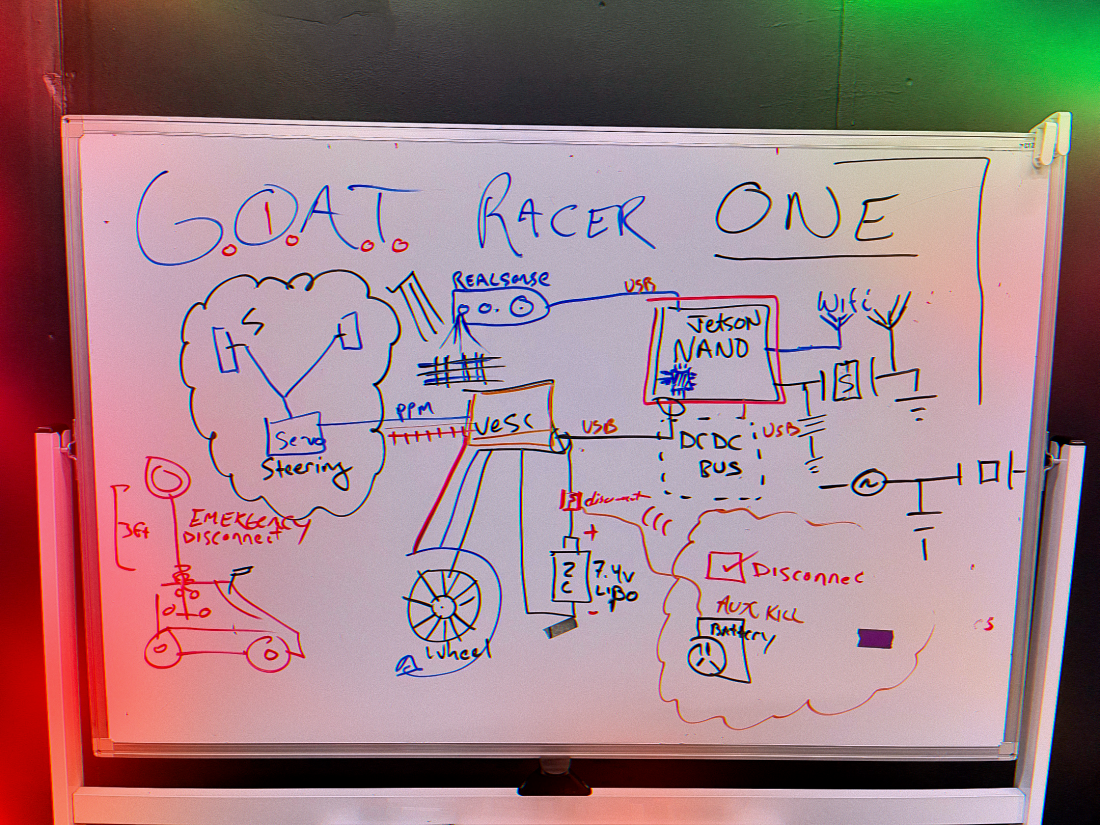
A YEAR INTO THE HACKATHON `24

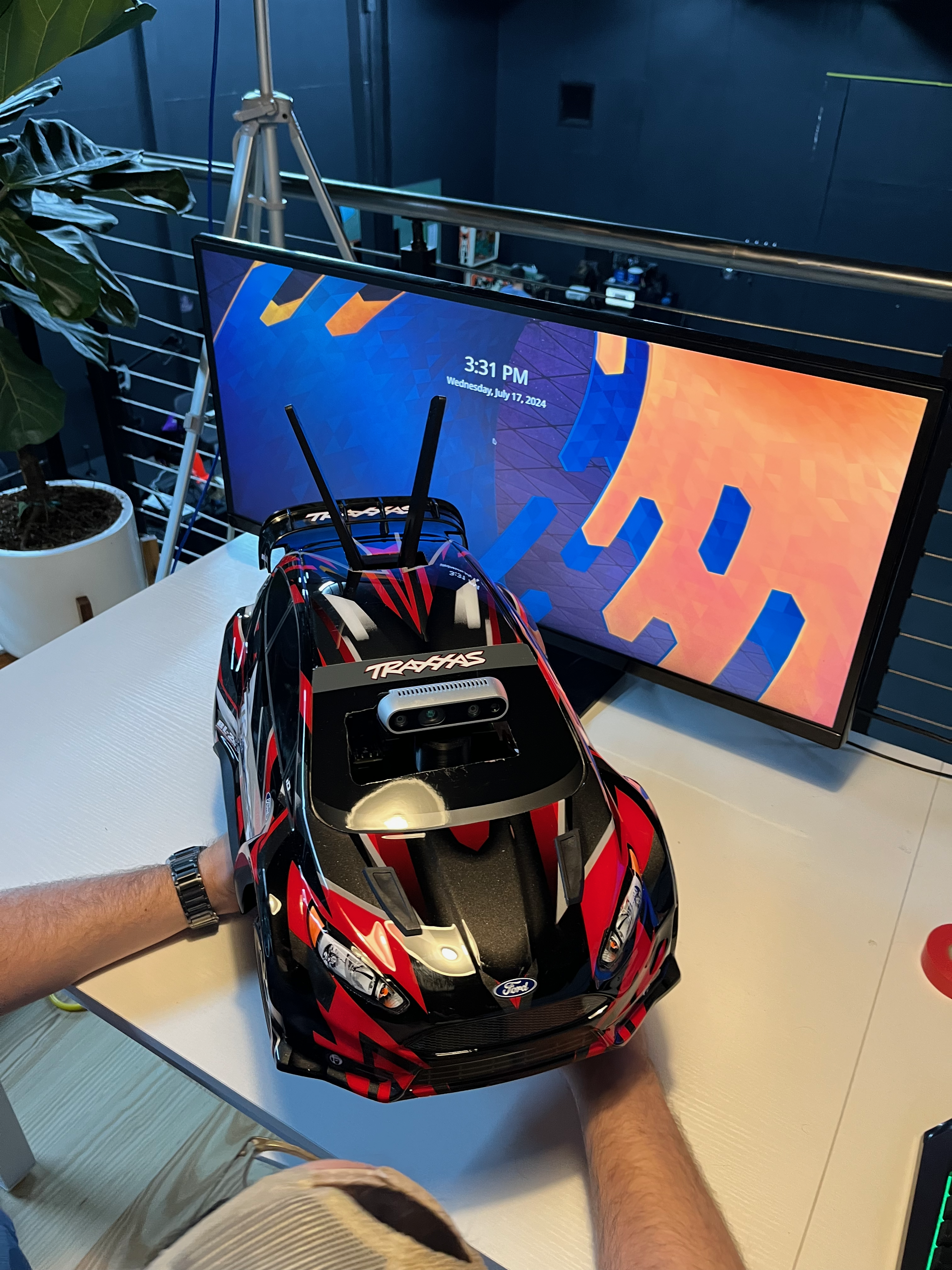
We started this project about a year ago. We thought it would be easy. There was an event GOAT CONF ONE where we were doing a hackathon for the GENAi Photo booth. Chuck er… Renan Barbosa commented this was too easy. Boasting we should do the Jetracer from NVIDIA also known as Project Leatherback. It is a really cool concept. An “Ai RC Racer” built around the Jetston Nano. The car hardware was built and assembled by the event. but the Simulation to Reality (Sim2Real) was still being developed. And still is…
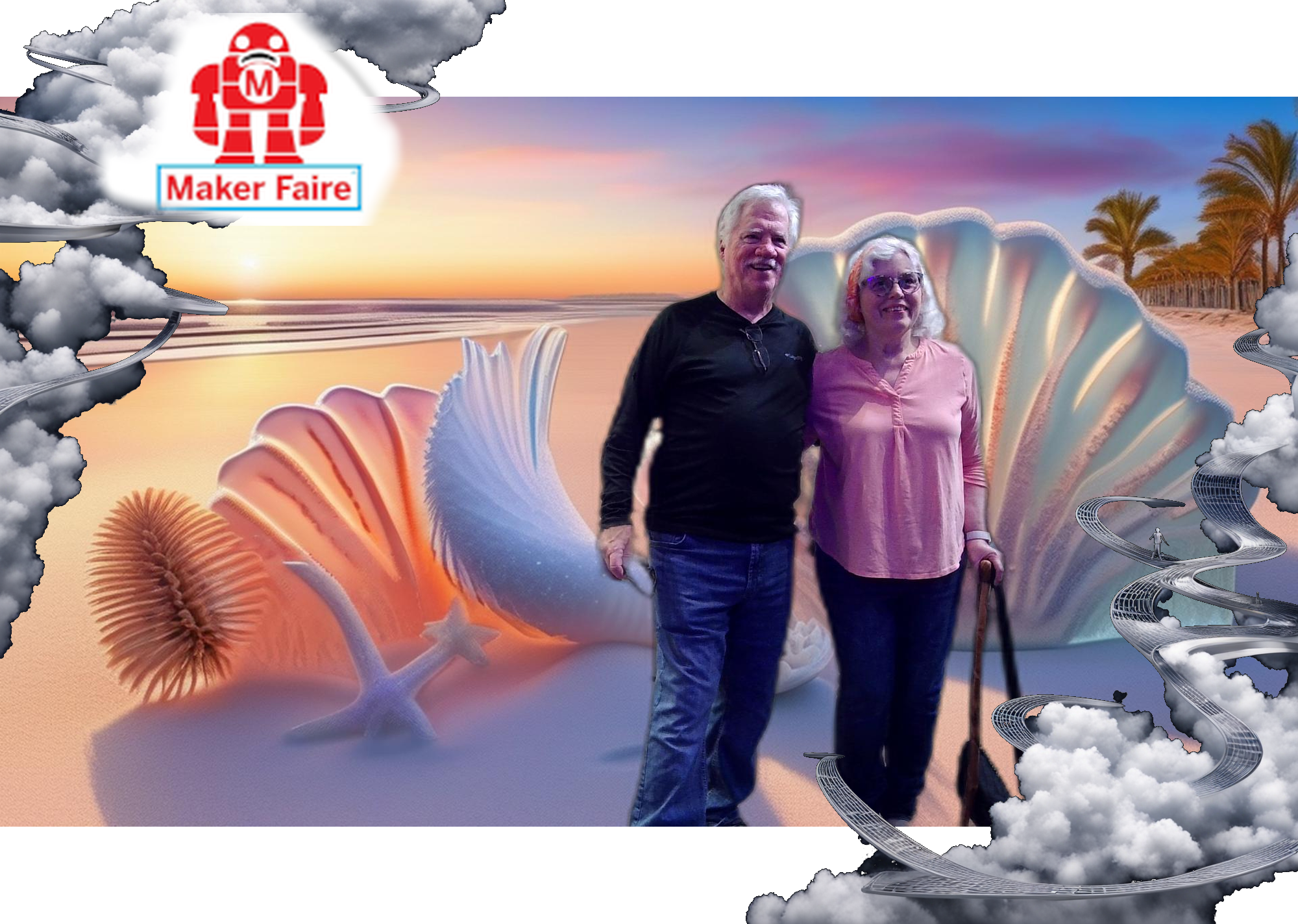
We did the event. It was great for what it was, a gathering of like minded individuals talking about cool stuff. But we aren’t done yet and we had to kind of finish a few other things in the mean-time. The GENAI Photobooth ended up with 2-3 subsequent hackathons and many events put on and we also had it at Makerfaire.

An Interactive Generative Ai Photobooth is what?

  • Generate a background image based on request or canned theme response
  • We take a picture and remove the background, without using a green screen
  • We put you with that background and tag it with the event name / frame
  • You get QR code to download it [WONTFIX]

We actually started “vibe” coding this on the side to prepare for next hackathon. I picked this project because I knew it was possible in short amount of time. (ahem) Turns out vibe coding does work and it is only getting better. It is a Jupyter Notebook so it isn’t pretty and it isn’t finished but it works. It is a great teaching project.

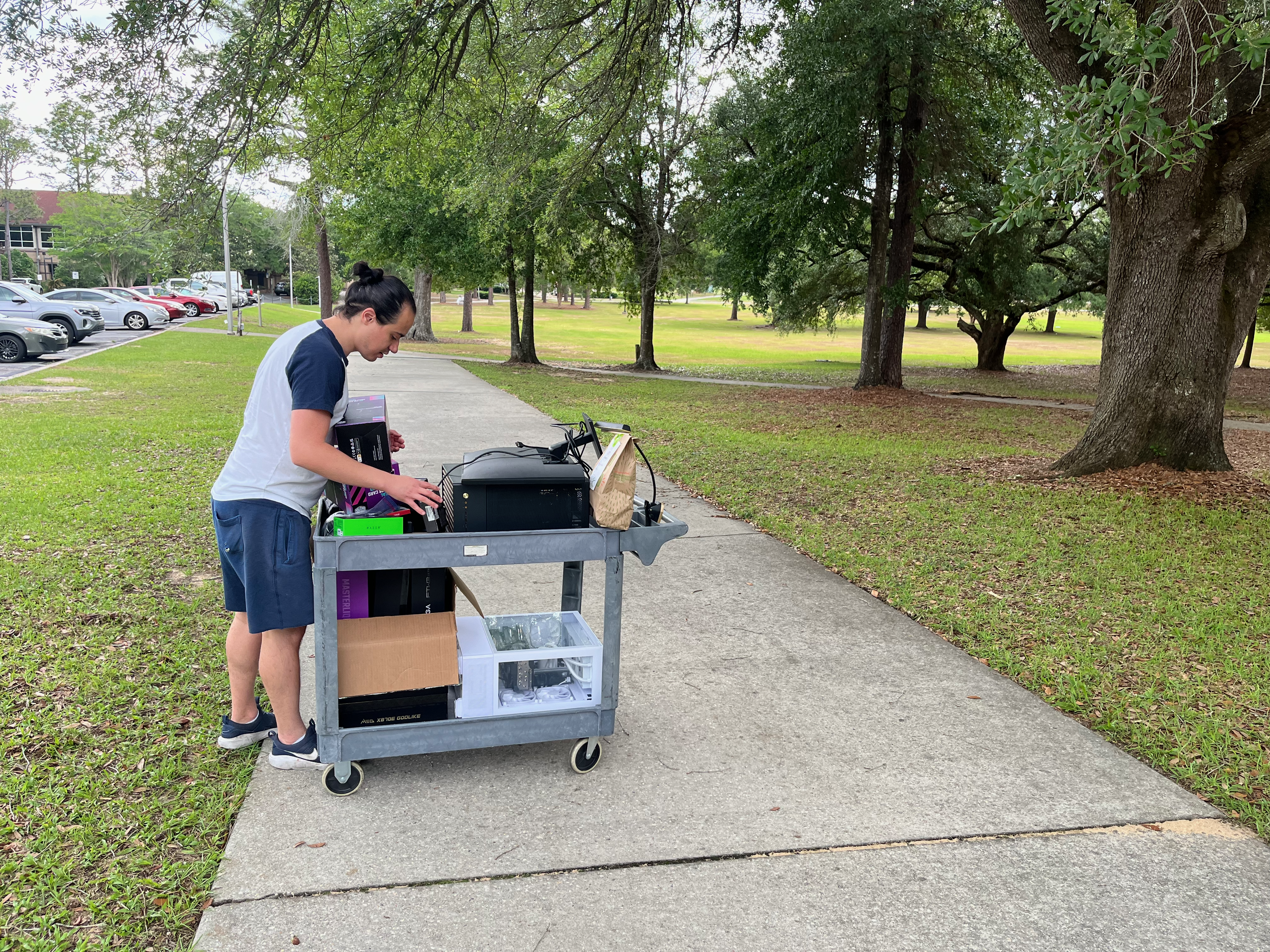
We have to haul the 4090 machine round though. 50lbs to ship these Docker containers. It was fun but, now it is over. To get quality pictures you still need professional lighting and generally knowing what you are doing. This technology will exist in near realtime soon on your phone. Back to the workstations with the 4090s.
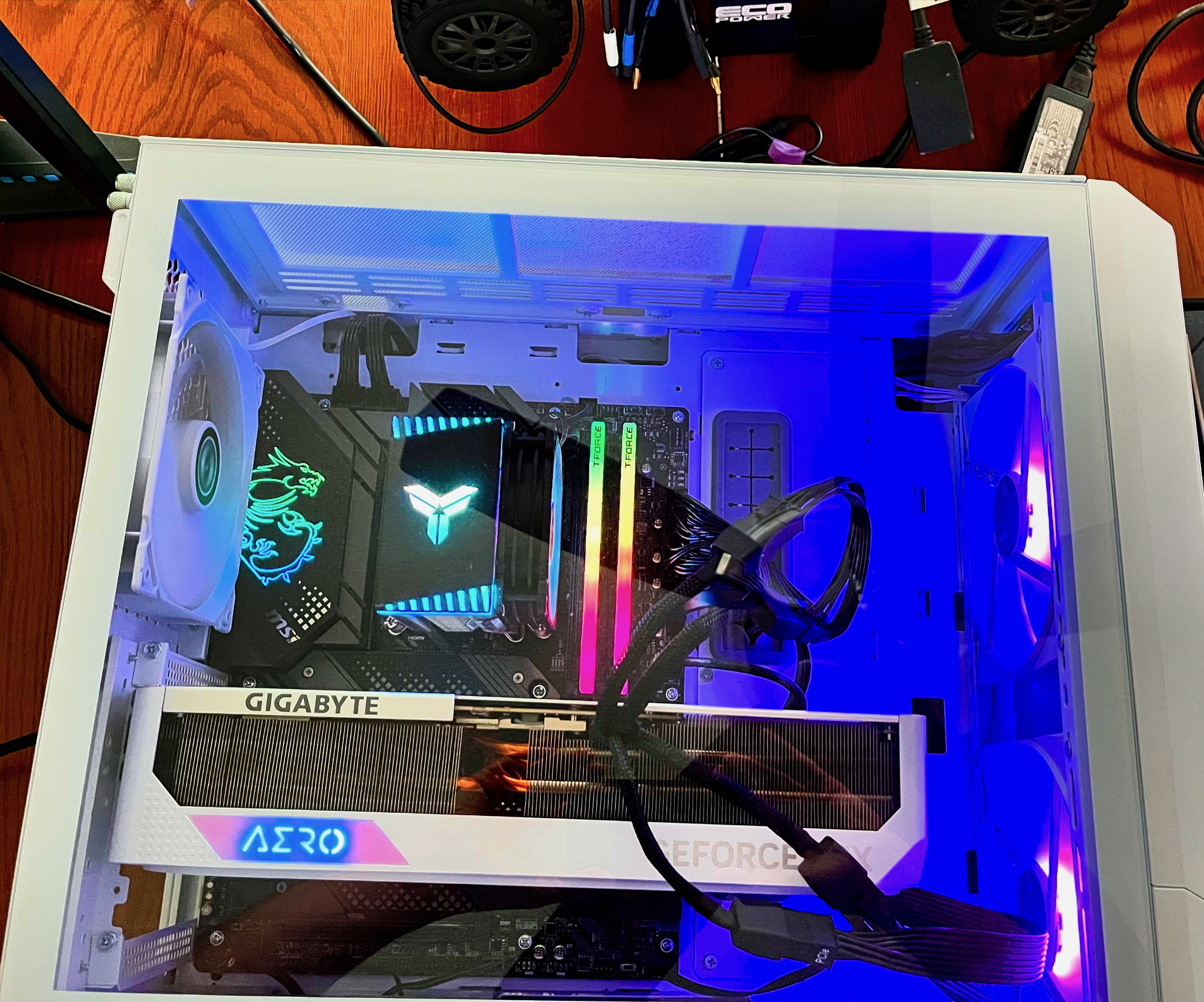
NVIDIA 4090 RTX MACHINE

Modern Workstations

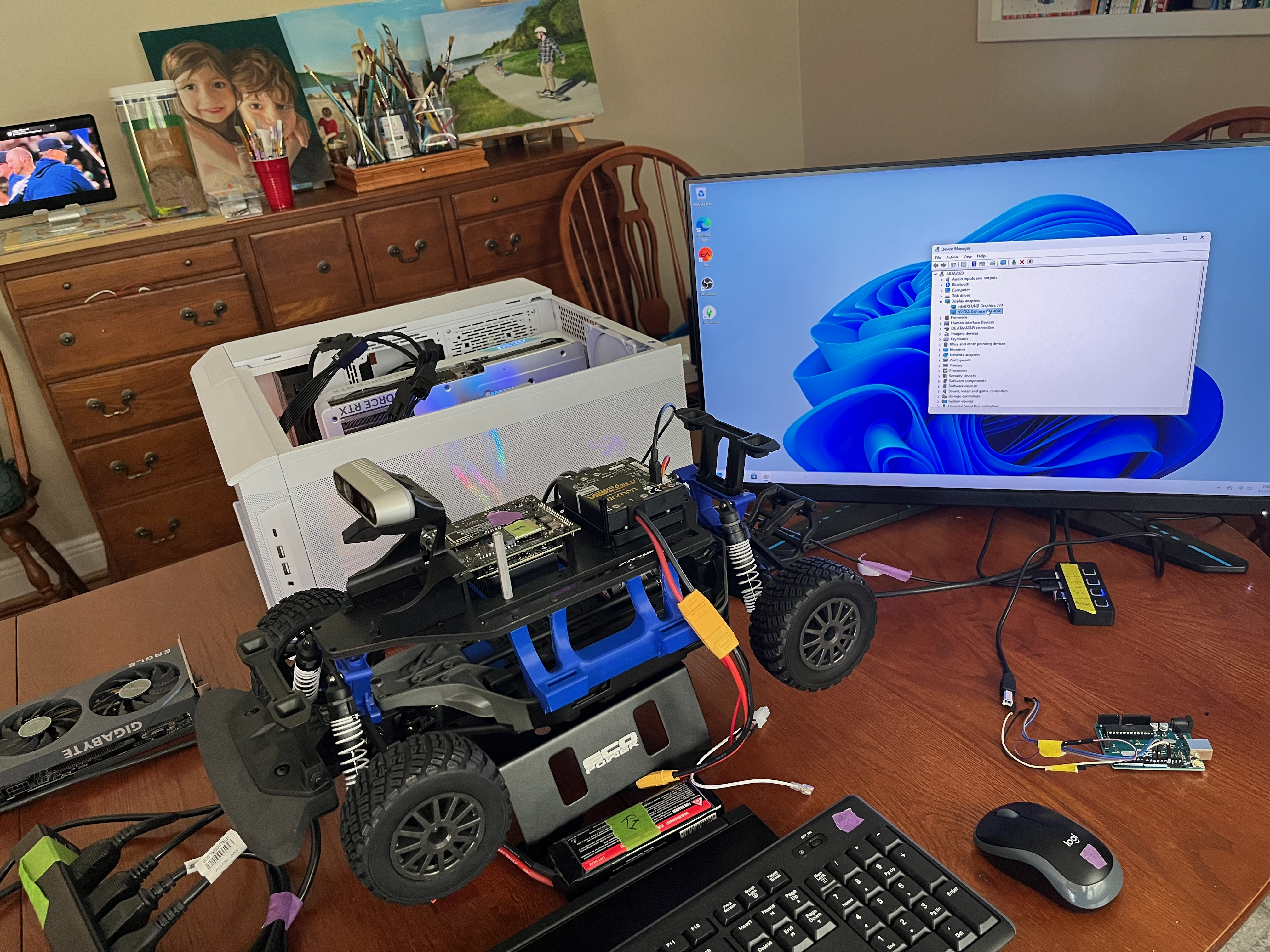
Between fighting with GPU drivers and out of memory problems, we built a few of these systems as backups because they are hard to source. 4090s have been sold out for over 6 months. 3090s are available as the best bang for your buck right now. All of our development is against NVIDIA GPUs. This is a practical choice as all GPUs in the market are sub-standard in tooling compared to NVIDIA’s for AI training/inference definitely and probably graphics performance.

With its 24GB of RAM and over 10,000 CUDA cores, you can run an LLM or two and maybe do image and video generation flows in a reasonable amount of time. This is also a great system to run IsaacSim and to train robots in a simulator.

At the conference we had to provision cloud instances for everyone as each workstation costs upwards of $4K. We had the computers in the cloud with Infinite Compute‘s donation of credits to rent them by the hour. Having a local workstation is a must when doing IsaacSim work in my experience.

Racer Update May

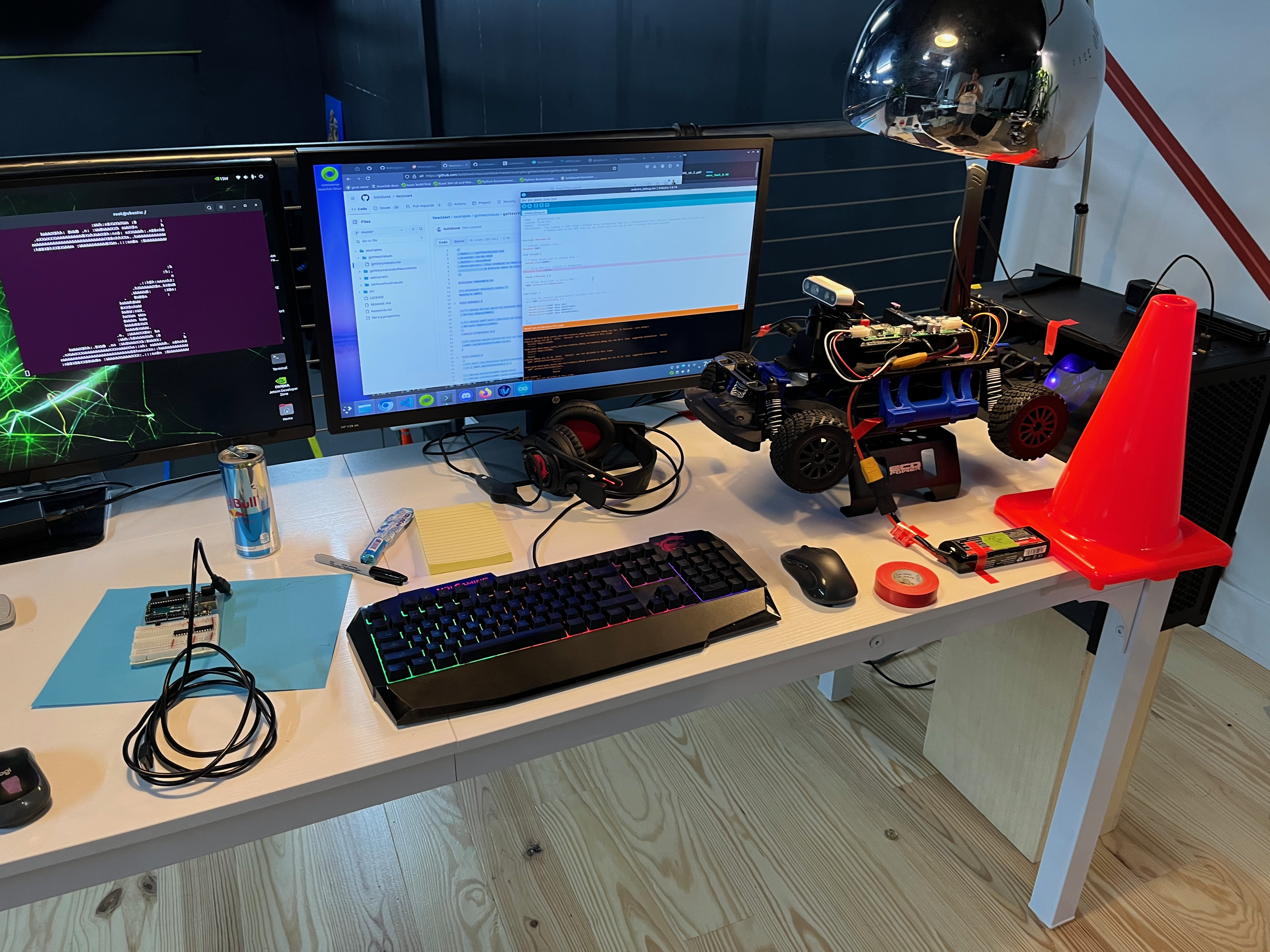
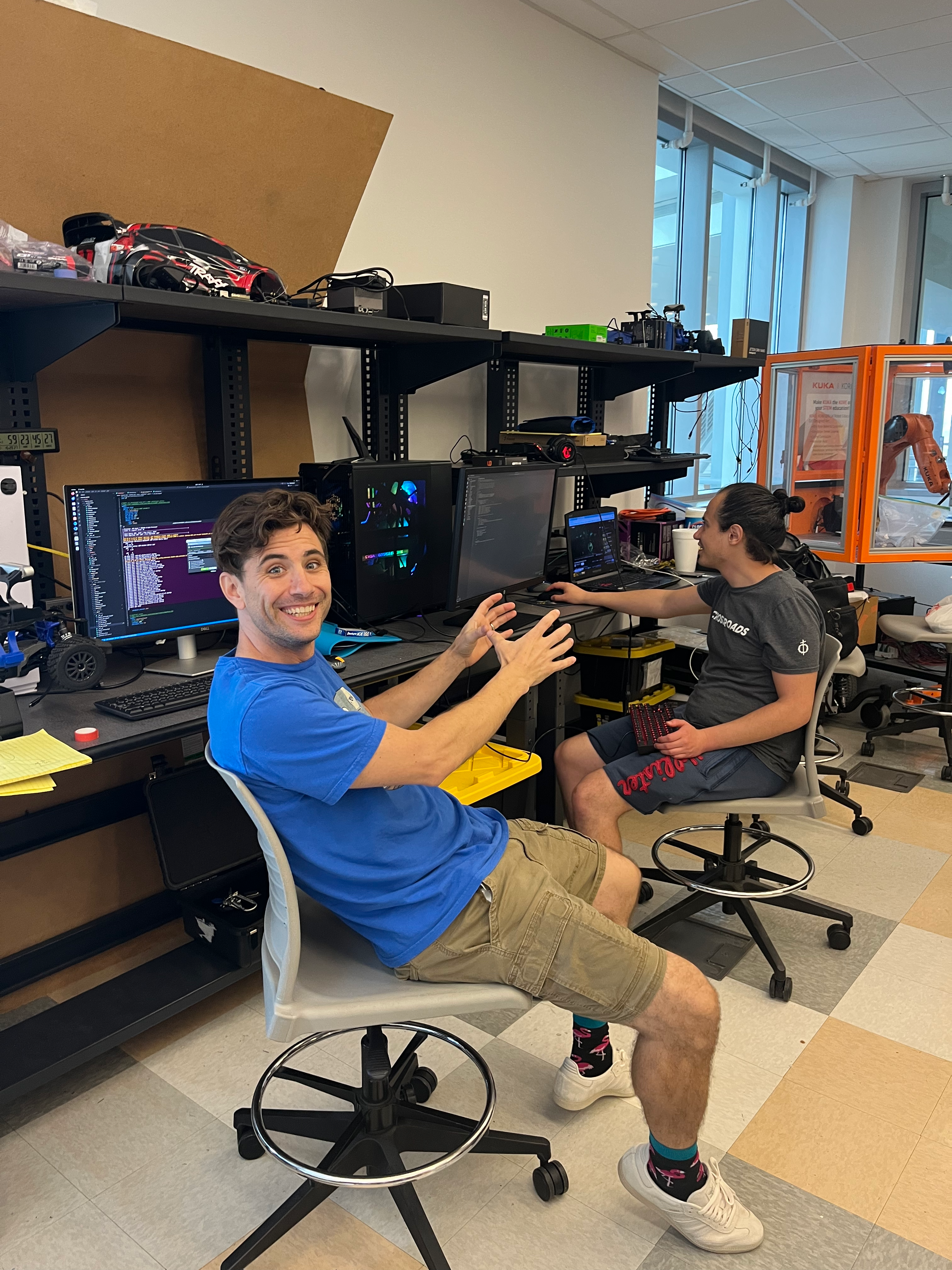
Moving the lab 3 times has been three too many. But we landed at the college while we finish up our last semester. Plan is still to graduate in fall but hopefully the bulk of the work will be done in the next 60 days. The one year point of when we wanted to be racing. The hardware is all there and the reinforcement-learning training of the models is working. Still trying to figure out vision.
What’s Next?

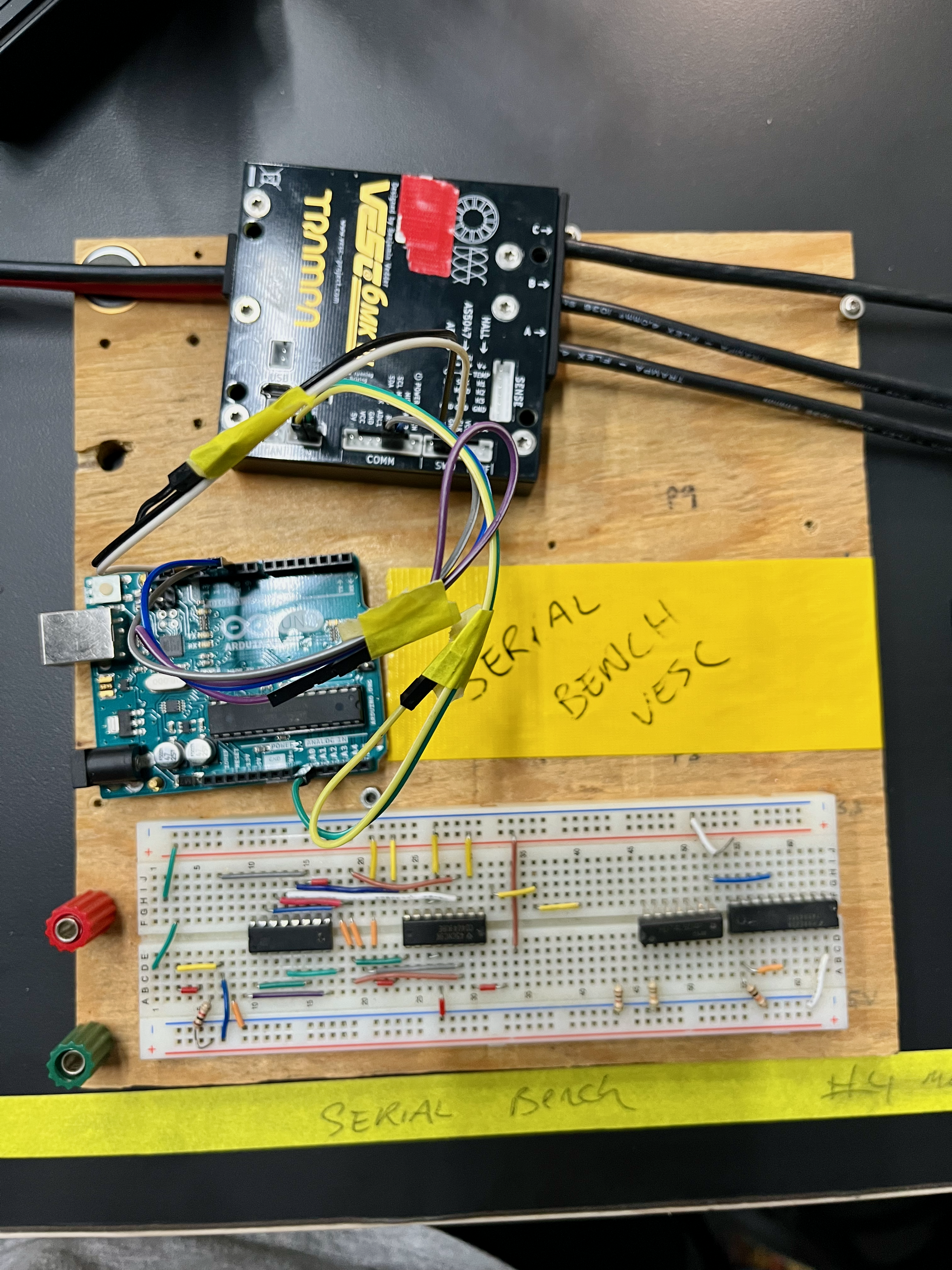
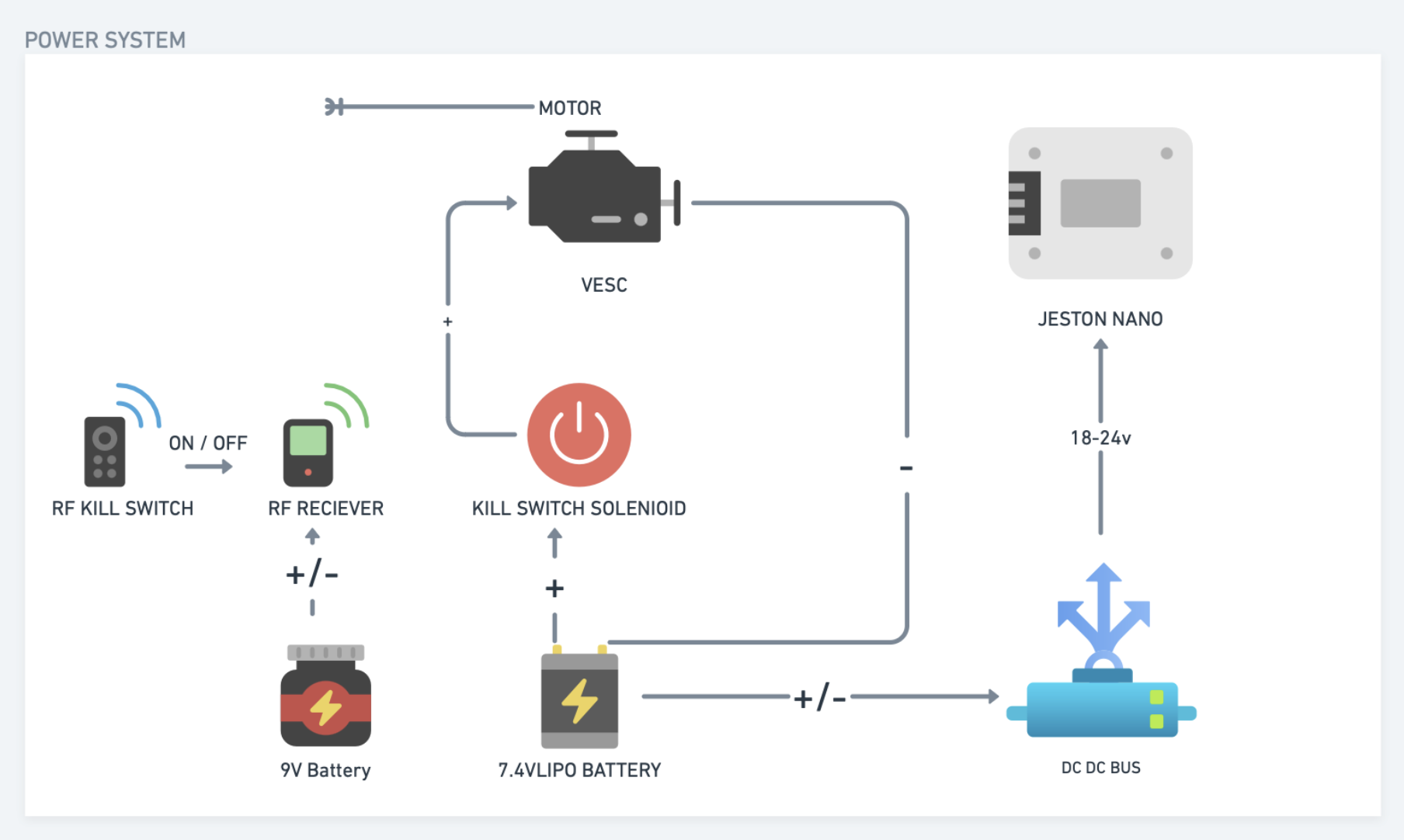
With the RF Kill Switch now designed and tested we need to fabricate a few more cables and assemble the car “finally”. With this safety feature we will begin with teleoperation again which is just publishing commands over wifi to the car. We never ran the car not on blocks because we didn’t have the kill switch. We hope to start with teleop next week.
Sim2Real

Currently the flow is to use IsaacLab and SKRL a python library to train 2 models for a reinforcement learning policy to be trained. Once a policy is trained it can be inferred in the simulator. In the case of the above video it is simple way-point navigation. The next step is to transfer this model from the workstation to the Jetson Nano.

This is where the fun begins. ONNX, TensorRT. We are still stuck on vision. Stay Tuned!
Microwaving Code

Introduction

New coding tools always face the same reaction: immediate adoption by some, outright dismissal by coding purists. This pattern repeats with every technological leap.

Vibe coding is already here – and soon we’ll just call it coding. Just like we dropped “smart” from smartphones, the distinction between AI-assisted and traditional coding is rapidly disappearing. What matters isn’t the tool but knowing when to use it.

The Microwave Principle

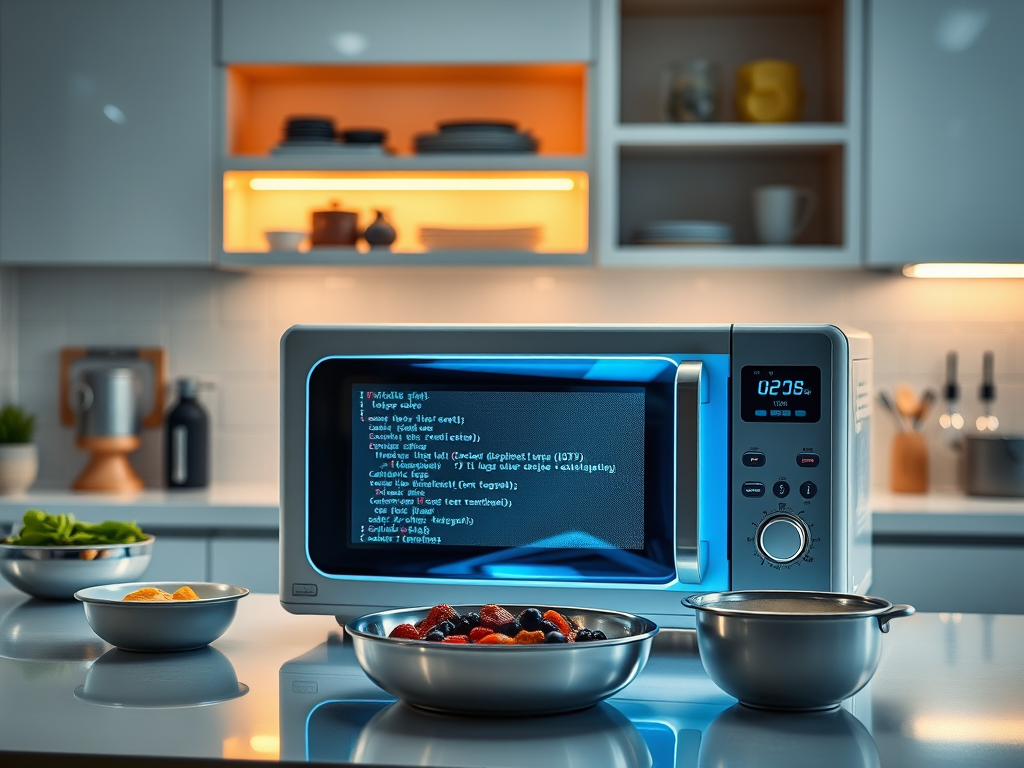
Nobody microwaves a prime rib. A good cook knows when to use a microwave and when to use the oven. Microwaving popcorn makes perfect sense – the result is good, it’s convenient, and alternatives require special equipment. For certain tasks, the microwave is clearly best.

How Industries Work

Industries move toward tools that save time, effort, and money. That’s how economies function. Markets prefer “good enough and affordable” over “perfect but expensive.” Throughout history, craftspeople who adapted to new technologies often thrived, while those who resisted change sometimes found themselves with fewer opportunities.

Better Tools Make You Stronger

Good tools don’t replace skill—they amplify it. A beginner with a microwave can’t fix a complex meal. Automation tools work best when used by people who understand programming.

Code You Can “Microwave”

Before Product-Market Fit: When testing ideas, fast prototyping is essential. Get something working quickly, then refine if it has potential.

UI Work: Interfaces follow patterns that can be generated faster than coding from scratch.

Data Transformation: Moving data between formats is perfect for automation – it’s tedious and follows consistent patterns.

Boilerplate: Project scaffolding and configuration should be automated because they follow templates.

Single-Shot Prompts: Here’s the magic – translating vague ideas into working demos. Taking your boss’s intent and turning it into something real that you can iterate on later.

Code You Shouldn’t “Microwave”

The truth is, we don’t yet know the limits of vibe coding. The boundaries are shifting rapidly.

What seemed impossible for automation yesterday becomes routine today. Perhaps the only constant is that each new capability shifts our attention to the next level of complexity.

For now, use your judgment. What parts of your system need your deepest expertise? Focus your hands-on attention there, and let the microwave handle the rest.

Beyond the Microwave: Programming’s Next Evolution

Right now, we’re stuck in a transition phase. We express intent in human language, which gets translated into human-readable code that compilers then execute. This multi-step translation process introduces inefficiencies and vulnerabilities at each layer.

Imagine instead a different paradigm: What if we operated in a space where we had fundamental building blocks that were mathematically guaranteed to run correctly? Where AI systems understood how to assemble these components without introducing security flaws or runtime errors?

Someone will still need to verify these foundational components, but this verification only needs to happen once. Once library code is verified and trusted, we can build upon that foundation with confidence. The code becomes provably correct by construction.

Human-written programming languages will always exist for experts who need precise control. But to truly break through to the next level of software development, we may need to let machines operate in a different computational space entirely—one optimized for how AI thinks rather than how humans think.

This isn’t about tools becoming better than experts; the experts are the ones who created the tools in the first place. Rather, it’s about designing new computational environments where computers have the advantage—where we write the game for them. In domains like massive data processing and pattern recognition, machines already outperform us. By creating new abstraction layers that leverage these strengths, we can unlock capabilities beyond what traditional programming paradigms allow.

The Smart Approach

The best developers know when to use quick tools and when to craft by hand. They save their expertise for where it adds the most value.

Conclusion

The future belongs to those who use automation strategically. Knowing when to “microwave code” and when to craft it by hand isn’t about laziness—it’s about maximizing impact.

Nobody microwaves a prime rib. But nobody ignores their microwave either.

In the end, the distinction may fade entirely as we move toward computational systems that combine the best of human creativity with machine reliability. The goal isn’t replacing human programmers—it’s augmenting them with tools that handle the tedious and error-prone aspects of coding, freeing them to focus on the truly creative work of solving problems that matter.

https://charlespetzold.com/etc/DoesVisualStudioRotTheMind.html